Corrosion Resistance in Pipeline Girth Welds Made from Stainless Steel
Understanding Pipeline Girth Welding and Its Importance
Overview of Pipeline Girth Welding
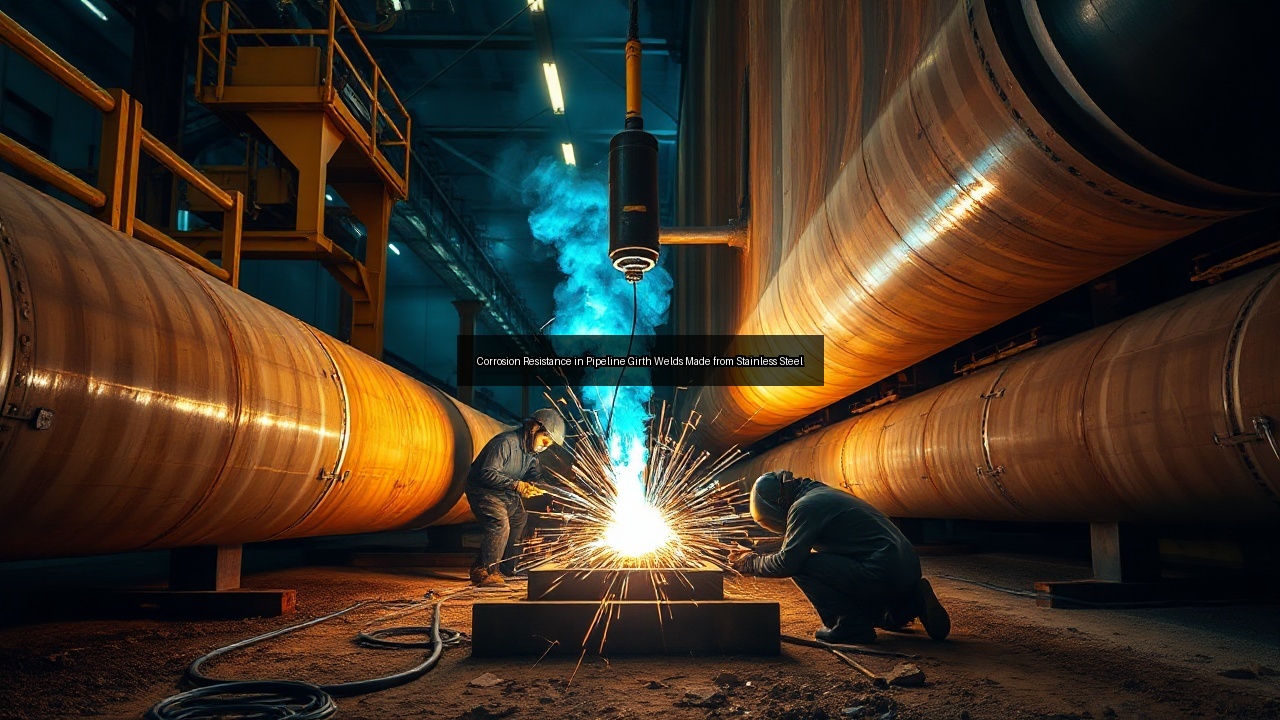
Pipeline girth welding joins sections of pipe end to end through circumferential welds that create continuous flow paths across long distances. Operators rely on this process to maintain structural continuity in transmission systems where every joint must withstand internal pressure and external loads. Stainless steel serves as the primary material in many applications because it combines high strength with inherent resistance to degradation. Welders execute these connections using precise parameters that control heat input and filler selection. The scope of pipeline girth welding extends from onshore transmission lines to subsea installations, demanding consistent execution to avoid weak points. Literature on the subject highlights how proper root passes establish the foundation for full penetration and defect-free results. Each girth weld undergoes evaluation for alignment, bead profile, and fusion quality before subsequent layers are added.
Role of Girth Welds in Pipeline Integrity
Girth welds form critical links that determine overall pipeline reliability under operational stresses. Any flaw in these joints can propagate under cyclic loading or corrosive exposure, leading to leaks or ruptures. Stainless steel girth welds deliver superior performance because the base metal and weld metal share compatible mechanical properties that preserve ductility and toughness. Construction teams prioritize weld strength during procedure qualification to ensure the joint meets or exceeds pipe body performance. Pipeline integrity programs schedule regular assessments that focus on girth weld condition to detect early signs of fatigue or material loss. Effective girth weld procedures specify preheat, interpass temperature control, and post-weld heat treatment where necessary. These measures protect against hydrogen cracking and maintain the corrosion barrier that stainless steel provides throughout the pipeline service life.
Key Materials Used in Girth Welding
Stainless steel dominates material selection for girth welds in environments that demand corrosion resistance alongside mechanical strength. Austenitic grades such as 316L offer excellent weldability and resistance to pitting and crevice attack when properly executed. Welders select matching or over-alloyed filler metals to preserve chromium and molybdenum content across the fusion zone. Pipelines constructed from duplex stainless steel require careful control of ferrite balance to avoid loss of corrosion performance after welding. Platinum thermocouples monitor temperature during procedure development to record exact thermal cycles that influence microstructure. Root pass techniques using gas tungsten arc welding establish clean fusion without oxidation that could initiate corrosion sites. Filler wire chemistry and shielding gas composition receive equal attention to minimize inclusions and maintain the passive film that protects stainless steel welds in aggressive service.
Corrosion Resistance in Stainless Steel Girth Welds
Properties of Stainless Steel Relevant to Corrosion
Stainless steel achieves corrosion resistance through a stable chromium-rich passive film that reforms rapidly after minor damage. In pipeline girth welds this film must remain intact across the weld metal, heat-affected zone, and base metal to prevent localized attack. Higher molybdenum content in certain grades improves resistance to chloride-induced pitting, a common threat in buried or marine pipelines. Welders preserve these properties by limiting heat input and avoiding excessive dilution that reduces alloying elements in the weld. Strength remains high because the austenitic matrix retains toughness even at low temperatures. Corrosion performance depends on surface finish, with smooth weld caps reducing sites for deposit accumulation. Stainless steel pipelines therefore maintain lower maintenance costs compared with carbon steel systems that require external coatings and cathodic protection.
Factors Influencing Corrosion Resistance
Several variables affect corrosion resistance in stainless steel girth welds. Heat input during welding alters microstructure and can deplete chromium at grain boundaries, creating sensitization that leads to intergranular attack. Proper shielding prevents nitrogen loss and oxidation that compromise the passive layer at the weld root. Plastic deformation from residual stresses may also influence local corrosion rates by creating strain-induced martensite in some grades. Temperature excursions during service can accelerate degradation if welds contain sigma phase or other deleterious precipitates. Construction practices such as proper cleaning between passes and control of interpass temperature help maintain the corrosion barrier. Weld inspection focuses on these factors to confirm that procedures deliver joints capable of long-term exposure without accelerated material loss.
Comparison of Stainless Steel with Other Materials
Stainless steel girth welds outperform carbon steel counterparts in corrosive service because they eliminate the need for extensive external protection systems. Carbon steel requires coatings and impressed current to manage corrosion, while stainless steel relies on its inherent metallurgy. Compared with nickel alloys, stainless steel offers lower material cost with adequate resistance for many pipeline applications. Weldability of stainless steel exceeds that of higher-alloy options, allowing faster production rates during construction. Strength-to-weight ratios remain favorable, and stainless steel pipelines exhibit reduced wall thickness requirements in some designs. Non-destructive testing reveals fewer defects when procedures are optimized for stainless grades. Overall, stainless steel delivers a balanced combination of corrosion performance, weld strength, and economic viability that supports its widespread use in modern pipeline projects.
Welding Techniques and Their Impact on Weld Quality
Common Welding Methods for Girth Welds
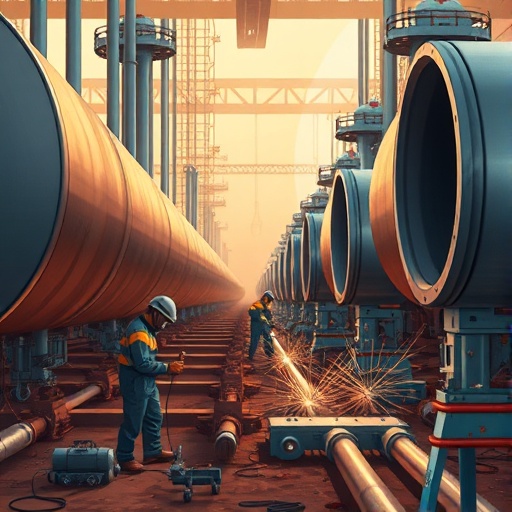
Pipeline girth welding commonly employs gas metal arc welding and shielded metal arc welding for fill and cap passes after an initial root pass. These methods allow high deposition rates while maintaining control over weld profile. Gas tungsten arc welding provides precision for the root bead, ensuring complete penetration without lack of fusion. Each technique influences residual stress patterns and heat-affected zone width that affect corrosion resistance in stainless steel. Welders adjust travel speed and current to minimize defects that could serve as initiation points for corrosion. Procedure qualification records document parameters that produce acceptable mechanical properties and corrosion performance. Consistent execution across multiple welders ensures uniform quality throughout long pipeline sections.
Friction Stir Welding: A Modern Approach
Friction stir welding introduces a solid-state method that joins stainless steel without melting the base material, thereby preserving corrosion resistance. The process generates heat through friction and plastic deformation, creating fine recrystallized grains in the weld zone. Pipeline girth welding benefits from reduced distortion and elimination of solidification cracking associated with fusion processes. Friction stir welding also lowers residual stresses that can accelerate localized corrosion. Equipment advances now support field deployment on pipelines, expanding the scope of this technique beyond laboratory settings. Weld inspection after friction stir welding focuses on hook defects and tunnel voids that may form if parameters drift. Operators report improved fatigue performance and corrosion behavior compared with conventional arc welds in stainless steel pipelines.
Evaluating Weldability of Stainless Steel
Weldability of stainless steel depends on alloy composition, thickness, and joint design. Austenitic grades tolerate high heat input without cracking, yet require attention to distortion control. Duplex and super duplex grades demand tighter thermal control to maintain phase balance and corrosion resistance. Literature reviews compile data on weld metal toughness and pitting resistance after various thermal cycles. Welders qualify procedures using transverse tensile tests, bend tests, and corrosion coupons that simulate service conditions. Successful evaluation confirms that girth welds meet strength and corrosion criteria before production welding begins. Consistent application of qualified procedures across pipeline construction projects reduces variability and supports long-term integrity.
Inspection and Testing of Girth Welds
Importance of Weld Inspection in Pipeline Construction
Weld inspection verifies that pipeline girth welding meets code and project specifications before burial or commissioning. Early detection of defects prevents costly repairs after the pipeline is in service. Stainless steel welds receive particular scrutiny because corrosion performance depends on sound fusion and proper microstructure. Construction schedules allocate dedicated time for weld inspection to maintain progress without compromising quality. Inspectors document compliance with acceptance criteria for porosity, incomplete penetration, and undercut that could compromise strength or corrosion resistance. Thorough weld inspection supports regulatory approval and operator confidence in long-term pipeline reliability.
Non-Destructive Testing Techniques
Non-destructive testing methods evaluate girth welds without damaging the pipeline. Radiography detects volumetric defects while magnetic particle testing reveals surface-breaking indications in ferritic materials. For stainless steel, eddy current and liquid penetrant methods complement visual examination. Non-destructive testing provides rapid feedback that allows welders to adjust techniques in real time. Pipeline construction relies on these tools to confirm that every girth weld meets integrity requirements before the next joint is completed. Data from non-destructive testing feeds into fitness-for-service assessments that extend asset life.
Ultrasonic Testing: Ensuring Weld Integrity
Ultrasonic testing supplies detailed volumetric information about stainless steel girth welds. Phased array ultrasonic testing creates sectorial scans that map indications by depth and length with high accuracy. Ultrasonic inspection identifies lack of fusion, porosity clusters, and cracks that radiography may miss. Automated ultrasonic testing systems travel around the pipe circumference, delivering consistent coverage independent of welder position. Results integrate with acceptance criteria derived from fracture mechanics to judge weld fitness. Ultrasonic testing therefore plays an essential role in confirming corrosion resistance and mechanical strength of pipeline girth welds.
Weld Inspection Procedures for Corrosion Assessment
Weld inspection procedures tailored for corrosion assessment examine surface condition, weld cap profile, and root geometry. Smooth transitions reduce turbulence and deposit accumulation that initiate pitting. Inspectors measure reinforcement height and check for undercut that could trap corrosive media. Stainless steel welds undergo additional evaluation for heat tint and oxidation that degrade the passive film. Procedures specify cleaning methods and acceptance limits that preserve corrosion performance. Regular application of these procedures throughout pipeline construction ensures uniform quality and minimizes future maintenance demands.
Challenges and Innovations in Pipeline Girth Welding
Temperature Effects on Weld Quality
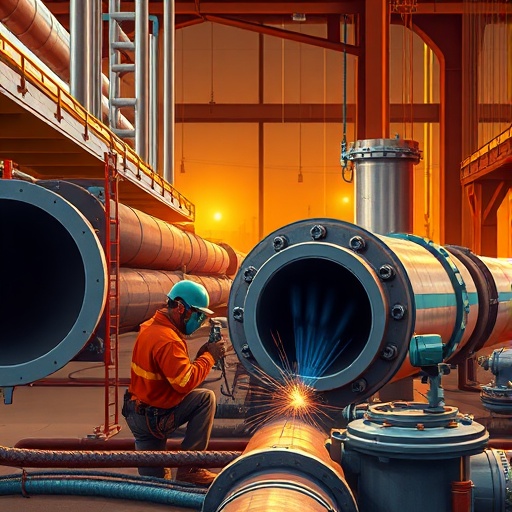
Temperature control during pipeline girth welding directly influences microstructure and residual stress in stainless steel. Excessive heat input promotes grain growth and sensitization that reduce corrosion resistance. Interpass temperature limits prevent accumulation of heat that softens the heat-affected zone. Preheat application for thicker sections reduces cooling rates and hydrogen cracking risk. Monitoring devices track temperature throughout the weld cycle to maintain parameters within qualified ranges. Proper temperature management supports both weld strength and long-term corrosion performance in demanding pipeline environments.
Addressing Plastic Deformation in Welds
Plastic deformation occurs in the weld zone and heat-affected zone due to thermal contraction and restraint. Excessive plastic strain can introduce residual stresses that accelerate stress corrosion cracking in stainless steel. Welding sequence optimization and balanced heat input minimize distortion and uneven strain distribution. Post-weld heat treatment relieves stresses in critical applications. Finite element modeling predicts deformation patterns and guides procedure adjustments before field welding begins. Effective control of plastic deformation preserves both mechanical integrity and corrosion resistance across girth welds in pipelines.
Future Trends in Girth Welding Technology
Future trends in girth welding technology emphasize automation, real-time monitoring, and advanced solid-state processes. Robotic systems improve consistency in pipeline girth welding while reducing welder exposure to hazards. Inline ultrasonic inspection combined with machine learning enables immediate defect detection and parameter correction. Developments in friction stir welding and laser hybrid processes expand options for stainless steel pipelines. These innovations aim to increase weld strength, enhance corrosion resistance, and shorten construction schedules. Continued research documented in technical literature will guide adoption of these technologies across the pipeline industry.